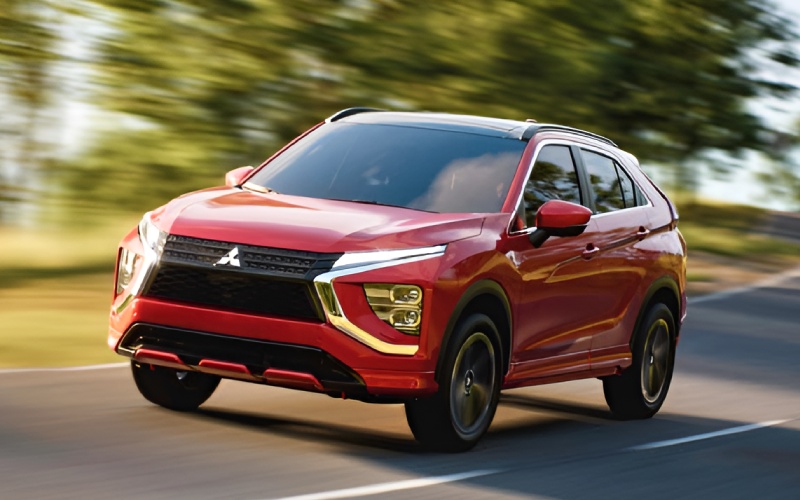
Toms River Mitsubishi - Which crossover is better for snow and rain around Elizabeth, NJ — 2026 Mitsubishi Eclipse Cross or 2026 Mazda CX-30?
Shoppers comparing the 2026 Mitsubishi Eclipse Cross and the 2026 Mazda CX-30 often ask one question: which crossover builds more confidence when weather turns ugly? The answer starts with how each SUV manages traction. Mitsubishi’s Super-All Wheel Control (S-AWC) is standard on every Eclipse Cross, using integrated control over torque distribution, braking, and stability systems to help the vehicle stay planted before slippage grows. Mazda equips every CX-30 with i-Activ AWD®, an excellent predictive system that responds quickly to changing surfaces. Both are strong, but the Eclipse Cross layers in user-selectable modes—Auto, Snow, and Gravel—to tailor response to your exact conditions. That fine-tuning, combined with standard turbocharged torque, helps the Eclipse Cross step off smoothly on slick intersections and merge with poise on wet highways.
Beyond traction, a confidence-building crossover gives you visibility and control in tight conditions. The Eclipse Cross offers an available Multi-View Camera System, available LED headlights, and an available Handsfree Power Tailgate for when your hands are full with winter gear. Inside, available heated front seats and an available heated steering wheel maintain comfort when temperatures plunge. The CX-30 counters with i-Activsense® features and an available 360º View Monitor on certain trims, plus conveniences such as available Alexa Built-in and Mazda Connected Services. Those are positives. But for many all-weather shoppers, the Eclipse Cross’s factory-rated 1,500-pound towing capacity adds versatility for small trailers and weekend equipment—functionality Mazda does not rate for the CX-30 in the U.S. Pair that with Mitsubishi’s industry-leading 10-year/100,000-mile Powertrain Limited Warranty and 2-year/30,000-mile Limited Maintenance, and the total package feels purpose-built for four-season living.
- Traction focus: Eclipse Cross uses standard S-AWC with Auto, Snow, and Gravel modes; CX-30 supplies i-Activ AWD® without terrain modes.
- Power delivery: Eclipse Cross has a standard turbocharged engine across trims; CX-30 reserves turbo power for specific models.
- Visibility aids: Both offer available surround-view camera systems; Eclipse Cross adds available LED headlights across key trims.
- Utility: Eclipse Cross is factory-rated to tow up to 1,500 pounds; CX-30 does not list a U.S. towing rating.
- Ownership coverage: Mitsubishi backs Eclipse Cross with a 10-year/100,000-mile Powertrain Limited Warranty and 2-year/30,000-mile Limited Maintenance.
For drivers who brave snow squalls, salt-slick coastal lanes, and heavy rain, Mitsubishi’s integrated approach to traction management and durability coverage resonates. The Eclipse Cross makes it simple to dial in traction, see around obstacles, and stay comfortable during long winter weeks—advantages that show up every day, not just on spec sheets.
Frequently Asked Questions:
Does the Eclipse Cross come with all-wheel drive on every trim?
Yes. Every 2026 Eclipse Cross includes Super-All Wheel Control (S-AWC) as standard, so you do not need to upgrade trims for four-wheel traction.
How does S-AWC differ from i-Activ AWD®?
S-AWC manages torque, braking, and yaw proactively and adds driver modes—Auto, Snow, and Gravel—to tailor behavior for specific surfaces. i-Activ AWD® is responsive and predictive, but it does not offer terrain modes.
Is the CX-30 factory-rated to tow?
Mazda does not list a U.S. towing rating for the CX-30. The Eclipse Cross provides a factory rating of up to 1,500 pounds when properly equipped.
When you are ready to compare trims and features hands-on, visit us at Toms River Mitsubishi for a test drive that focuses on your daily conditions and questions. Our team is proudly serving Irvington, Elizabeth, and Millburn with clear answers, expert guidance, and an easy path to the right crossover for your life.