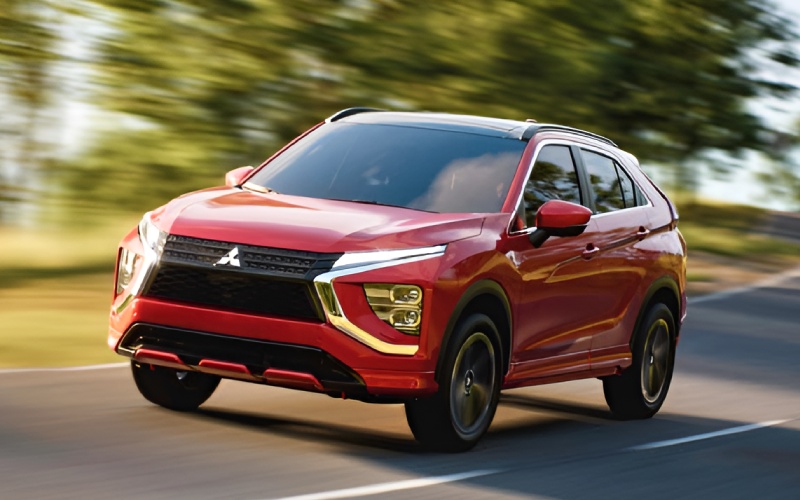
Toms River Mitsubishi - Which AWD system fits daily life around Elizabeth, NJ better — S-AWC on the 2026 Mitsubishi Eclipse Cross or HTRAC on Hyundai Kona?
When cross-shopping compact SUVs, one of the most common questions centers on all-wheel drive: which system offers the best balance of traction, agility, and confidence without compromising daily comfort? In this comparison, we look closely at Mitsubishi’s Super All Wheel Control (S-AWC) on Eclipse Cross and Hyundai’s HTRAC AWD on Kona to clarify how each behaves in real-life scenarios like wet mornings, slushy shoulders, and quick highway merges. Both systems aim to keep you moving with minimal drama, but they take different paths to get there, and those differences show up in how stable, predictable, and relaxed you feel behind the wheel.
S-AWC comes standard across the Eclipse Cross lineup, which means you start with an all-conditions baseline the moment you drive off the lot. The system coordinates traction and yaw control using brake-based torque management and stability logic, working seamlessly with the steering and throttle to keep the vehicle pointed where you intend. Hyundai’s HTRAC AWD is an available system on Kona; it delivers confident traction and uses drive modes to tailor behavior, but because it is optional, some trims on dealer lots will be front-wheel drive. If your routine includes early departures, beach parking, or unplanned detours on rain-slicked roads, the difference between standard and optional AWD matters.
- System philosophy: S-AWC integrates traction and stability logic to help manage cornering forces; HTRAC focuses on distributing torque for traction with selectable drive modes.
- Availability: S-AWC is standard on every Eclipse Cross; HTRAC is available on Kona, so some vehicles are FWD-only.
- Low-traction poise: S-AWC’s brake-based torque control helps settle the vehicle in off-camber turns or patchy surfaces; HTRAC offers Snow and other modes to refine response.
- Parking and close-quarters control: Eclipse Cross offers an available Multi-View Camera System; Kona provides an available Surround View Monitor on Limited.
- Daily comfort: Eclipse Cross tuning emphasizes a quiet, composed ride; Kona tuning feels nimble and urban-friendly.
- Utility flexibility: Eclipse Cross is factory-rated to tow; Kona does not carry a U.S. tow rating.
Because traction stories play out differently from driver to driver, it helps to focus on the most common use cases. If you frequently navigate wet rotaries, merge from short on-ramps, or park on angled shoulder spots, a system that actively supports rotation control can make the difference between a small correction and a bigger steering input. S-AWC’s coordination of stability and traction is designed with those moments in mind. If your routes are largely dry and urban, HTRAC’s well-tuned torque distribution and mode selection will feel secure and predictable, especially on upper trims with added driver assistance.
Feature availability is another piece of the confidence picture. Eclipse Cross pairs S-AWC with available driver-assistance and convenience features such as Adaptive Cruise Control with Stop & Go, the Multi-View Camera System, Handsfree Power Tailgate, and a heated steering wheel across multiple trims. Kona’s standout tech includes large digital displays and SmartSense safety features with optional Surround View Monitor and Highway Driving Assist, mostly reserved for the Limited trim. If you value visibility and calm control in tight parking, both offerings deliver strong camera systems at the top end, but Eclipse Cross builds in traction assurance from the start.
Finally, consider ownership experience. Mitsubishi backs Eclipse Cross with an industry-leading powertrain warranty and standard limited maintenance for added peace of mind. For many shoppers, knowing that S-AWC is always on duty and supported by robust coverage is the clincher. For on-road feel, test both on the same loop and pay attention to mid-corner stability over mixed surfaces, the ease of low-speed maneuvering, and how relaxed the steering stays in slippery spots. Those are the moments when system philosophy shows up in your hands and in your confidence.
Toms River Mitsubishi is happy to set up back-to-back evaluations, serving Irvington, Elizabeth, and Millburn with expert guidance on how S-AWC and HTRAC behave in the real world. Bring your daily questions, favorite routes, and driving preferences, and focus on how each SUV makes tricky conditions feel straightforward. That clarity is what makes a feature like standard S-AWC more than a spec line — it becomes a daily confidence booster.
Frequently Asked Questions:
Does S-AWC change how the Eclipse Cross handles in corners?
Yes. S-AWC coordinates traction and stability logic to help the vehicle track cleanly through the turn, even if surface grip varies, which can reduce the need for mid-corner corrections.
If I choose a Kona with HTRAC, will it feel secure in winter?
Yes. HTRAC delivers confident traction and offers Snow and other modes; just be sure the specific vehicle you select includes AWD, since Kona also comes in FWD configurations.